Value Is a Decision.
Axiology, consumerism, and the discipline of choosing what earns its place in your life.
I used to think consumption was a matter of preference. What you like, what you can afford, what you choose. It felt simple. You see something, you respond, you decide. That view still holds in part, but it misses something quieter.
Axiology is the study of value. Not price, not utility, but worth. What something means, what it represents, and what it reinforces over time. Alongside it sits the idea of axia, the units of value themselves. The things you assign importance to, often unconsciously. The subtle markers that shape your decisions, your identity, and the way you relate to the world around you.
When I sit with that, it becomes clear how much of what I value has not been fully chosen. Some of it has been inherited. Some absorbed. Some picked up through repetition rather than intention. It is easy to mistake familiarity for alignment.
Seen this way, consumerism is only one expression of something broader. It is not just about markets or products; it is about meaning. Every choice carries weight. Not only in what you buy, but in what you return to, what you tolerate, what you give your attention to. You are always assigning value, whether you pause to consider it or not.
That is where things begin to sharpen, at least for me.
Because the real question is not what you consume, but what you keep.
I notice how quickly things accumulate. Inputs, opinions, commitments, patterns. Some useful, some less so. Over time, it builds. And without reflection, everything can start to feel equally important. Which means very little actually is.
Discernment asks for something different. It asks for honesty. What is supporting you, and what is quietly draining you. What feels true, and what has simply been carried forward without question.
This is where the idea of the edit becomes more than a creative instinct. It becomes a practice.
Editing is not about removal for its own sake. It is a decision about value. What stays, what goes, and why. In consumer culture, this might look like buying less and choosing with more care. In your own life, it goes further. It touches how you spend your time, where your attention rests, and what you allow to shape your thinking.
I am realising that much of this work is less about adding and more about noticing. Noticing what you have been holding onto without choosing it. Noticing what no longer feels aligned, even if it once did.
Axiology makes that visible. Value is not something you find; it is something you assign. Which means the shape of your life is, in part, a reflection of those decisions, conscious or not.
Until you make the unconscious conscious, it will direct your life and you will call it fate. — Carl Jung
There is a quiet responsibility in that. Not pressure, but awareness.
Most of us will get it wrong at times. I know I do. It is easy to drift, to default, to follow what is already in motion. But even a small pause can change the direction. A moment to ask, does this still earn its place?
You do not need to get it perfect. You just need to stay aware enough to adjust.
Clarity is the sharpest tool in the room. And often, it begins with the quiet decision of what you are willing to keep.
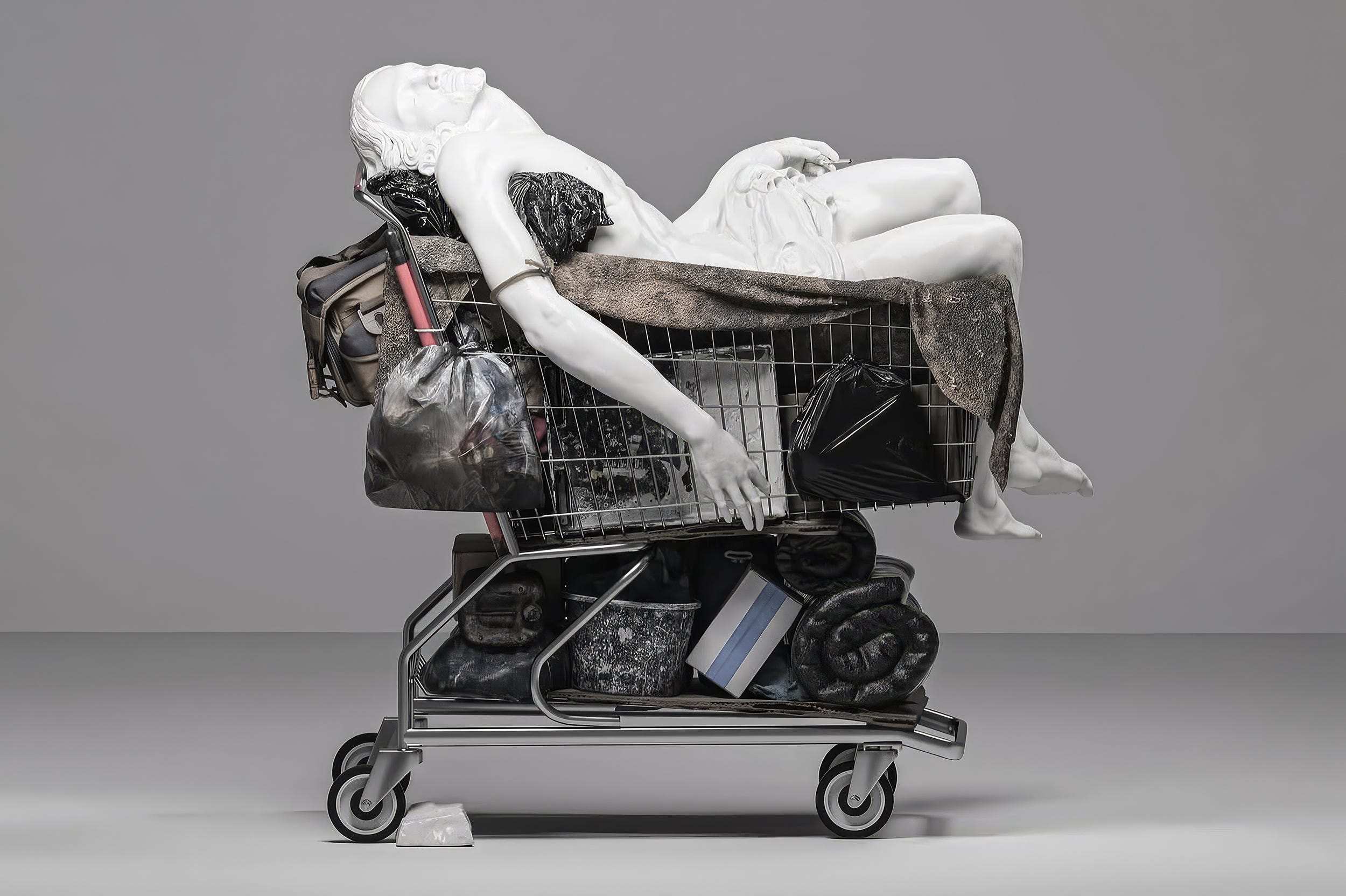
Image: Please, Pietà (2024), Micc. A contemporary reworking of the Pietà, examining value, excess, and the weight of modern life.
More pieces from Substack.



Sign up to subscribe.
Independent thinking on brand, creativity, and the ideas shaping both.
Connect.