A Brand Is a Feeling. So What's Holding It Together.
The conversation about sensory branding is right. It's just incomplete.
Sensory branding has been the conversation for a decade. It's finding its way back into the room now, and the timing makes sense. The tools that make things are in everybody's hands. Production has been democratised. The visual landscape is flooding with content that AI can generate in seconds and tools can publish in one click. Things that look considered. Things that feel almost right. Almost. And in that environment, feeling is now the last thing that can't be faked. The brands that make you feel something are standing out precisely because so much around them doesn't. It's the right conversation. But it's still only half of it. Because feeling without infrastructure is just intention. And intention, unprotected, leaks.
The feeling is the part everyone chases. It's conscious. Nameable. The things we can see, hear, touch, smell. The part that gets the case studies and the keynotes. But the conversation almost always stops there. At the feeling. At the surface. And quietly skips the harder question.
Because consistency isn't sensory. It's structural.
The infrastructure holding the feeling together operates beneath conscious thought entirely. Layers down in the psyche. Nobody walks into a well-considered space and thinks the system is coherent. They just feel at ease. Nobody moves through a brand's world and registers the visual discipline at work. They simply trust it. The architecture is invisible when it's working. Which is precisely why it's the last thing anyone thinks to protect.
When it's absent, everything feels slightly wrong without anyone being able to say why. And the brand finds itself in a permanent state of reactivity. Adjusting. Chasing. Never quite settling. Because there's no centre, or structure, to return to.
The customer never diagnoses the inconsistency. They just stop feeling certain. And uncertainty is the enemy of loyalty.
This runs deeper than a social media feed. Deeper than a campaign. A brand inhabits a world. Everything inside that world, the digital presence, the physical space, the packaging, the email, the way someone answers the phone, the care taken for a supplier briefing, the standard applied to the smallest internal decision, all of it carries the feeling. Or it doesn't. The customer, the supplier, the person inside the business, they can't always name what they're responding to. But they feel the absence of it immediately.
It's not about getting every detail right. Nobody does. It's about the consistent application of care across the entire landscape the brand inhabits. Asking the same question before anything goes out the door: does this feel like us? Not just for the campaign. For everything.
Get that thinking in place early, before the direction is set, before the foundation is poured, and something shifts. Anyone can touch the brand without breaking it. The tools available today are extraordinary. More people than ever can produce content, build assets, contribute to the visible surface of a brand. That's genuinely useful. But tools without a system produce volume, not coherence. And volume without coherence is noise. Noise erodes the feeling faster than silence ever could.
The solution isn't control. It's infrastructure. Build the system properly at the start and the feeling holds. Not because it's being policed. Because the thinking was done upfront.
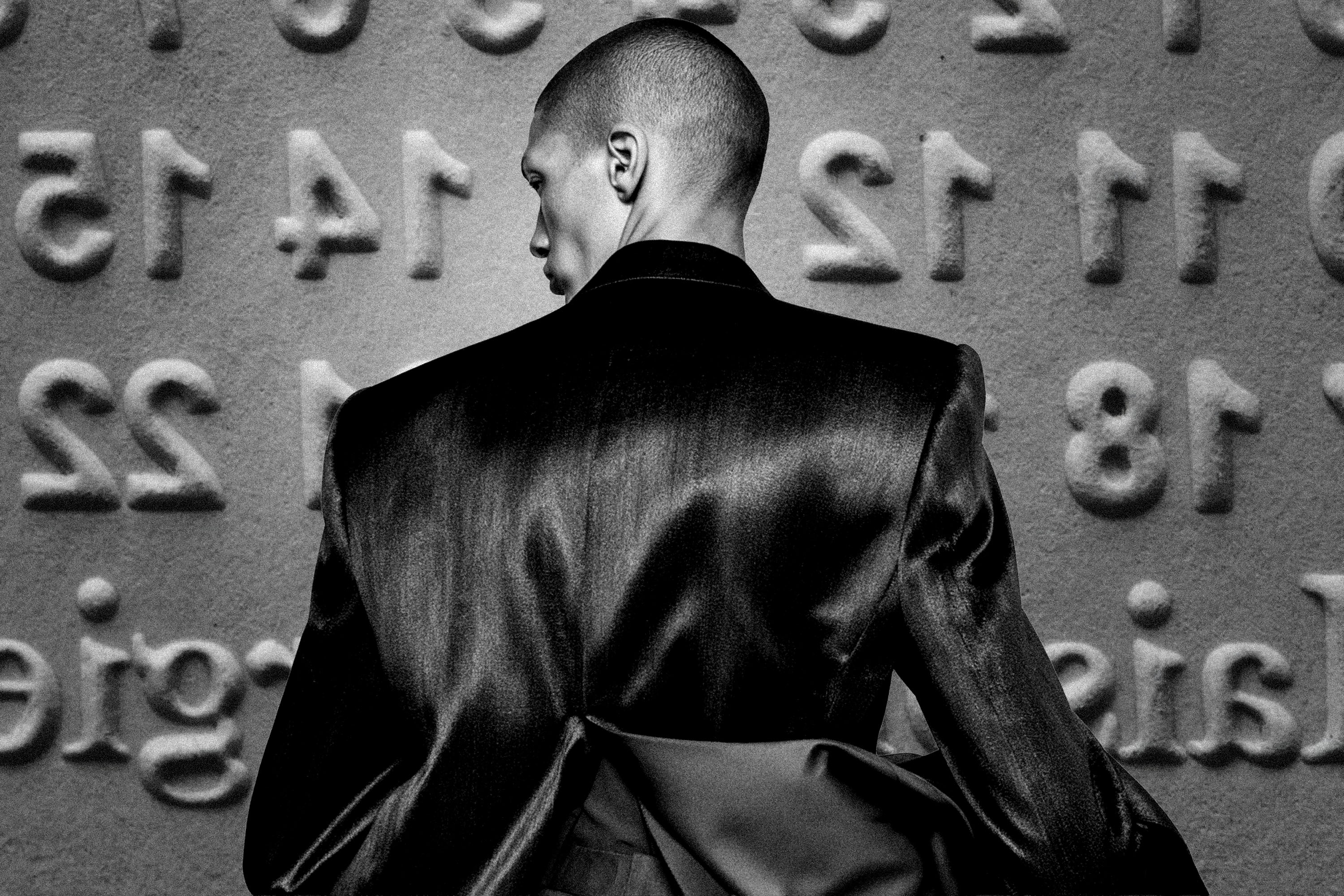
I often return to what I see as a masterclass in exactly this. Maison Margiela. Not the Galliano era. The founding intelligence. Martin Margiela built one of the most recognisable visual identities in fashion history without putting his name on a single thing. No logo. No monogram. Just a white label, four stitches at the corners, often visible on the outside of the garment, and a grid of numbers from 0 to 23. Each number corresponding to a specific line within the house. A category. A precise location within the system. Only one number circled on each label. Quietly telling you exactly where you were inside the world, without ever announcing it.
His creative partner Jenny Meirens put it plainly. "When people come into a shop and see strong clothes with no name on them they are going to be more curious." Curiosity over declaration. Codes over logos. Infrastructure over performance.
And Margiela himself? No interviews. No photographs. No appearance at the end of his own shows. He communicated by fax. In a famous Vogue shoot, the entire atelier posed for a group photograph. A single chair sat empty in the front row. His.
That wasn't an oversight. It was a decision. Made once. Held consistently. Across every collection, every season, every operation, every touchpoint of the brand. The founder's own invisibility was part of the system. As considered as the stitching. As deliberate as the numbers.
When it's right, the customer doesn't experience a brand. They inhabit one.
The most talked about chair in fashion was always empty. That wasn't an accident. It was the point.

Portrait of the Maison Martin Margiela team, by Annie Leibovitz for US Vogue in 2001 (reprised in 2008)
More pieces from Substack.


Sign up to subscribe.
Independent thinking on brand, creativity, and the ideas shaping both.
Connect.